The ED Academy
Program Overview
The ED Academy is a 12-month hybrid training program that supports new Executive Directors (EDs) with the skills and confidence to lead their organizations and navigate the complexities of not-for-profit management. Many Executive Directors step into their roles without formal training or limited onboarding and are worried about ‘what they don’t know.’
The ED Academy equips EDs with the knowledge, tools, and peer support needed to build confidence, lead teams, and focus on their highest priorities.
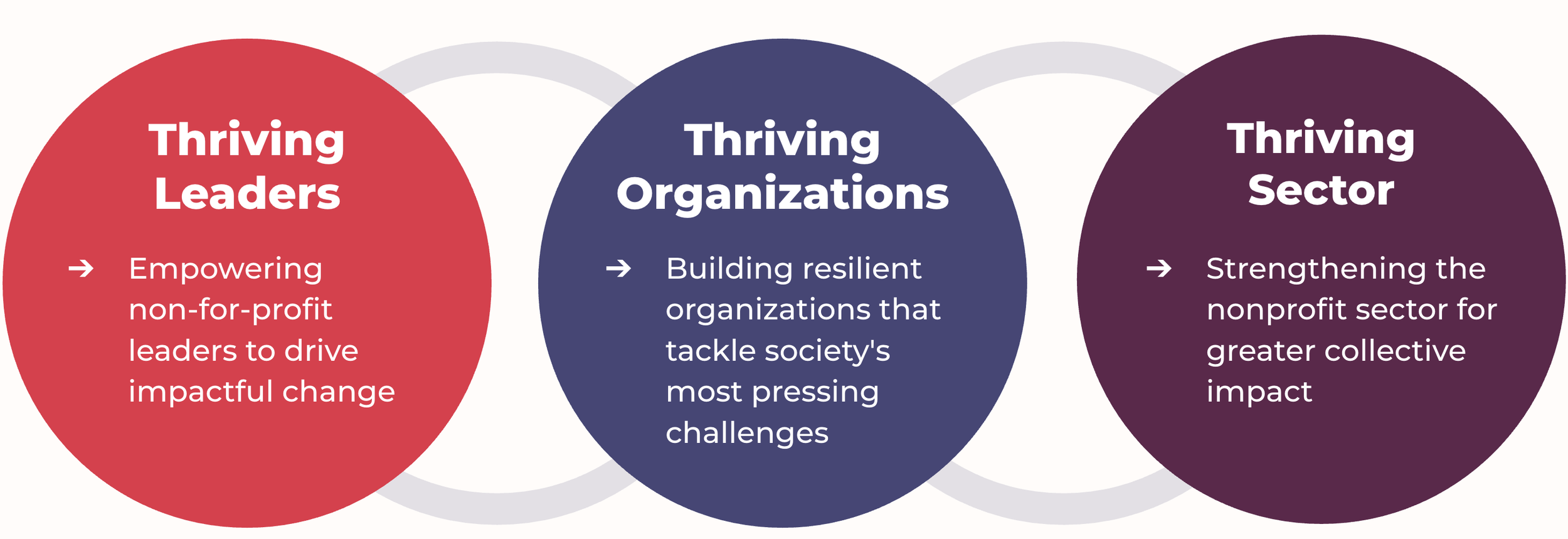
Because the role of the ED is that of a generalist, the ED Academy is “a mile wide and an inch deep” by design. It is both an introduction to all aspects of the ED’s role in small organizations as well as applied operational learning. Participants will leave the ED Academy with confidence and clarity, equipped with foundational plans that will provide stability, continuity, and a clear direction for their organizations.
“I feel more confident in the work that I do, have more structure around what I should be doing, and have been getting inspired to execute the work with more confidence.”
- ED Academy Participant
Learning Environment:
The ED Academy is a facilitated 12-month training, coaching, and mentorship program. It is delivered in a hybrid learning environment and consists of:
-
Monthly full-day gatherings (in-person, with some virtual sessions in winter months) where EDs learn, connect, and apply tools together in community.
The full-day sessions are often where the magic happens at the ED Academy. The training is tailored to the real challenges of leading a not-for-profit. Together we explore practical tools on a range of leadership and organizational topics, and take time to reflect on their work.
Perhaps most importantly, they learn from one another’s experiences and discover they are not alone. Relatively quickly, these sessions build a trusted community of leaders who share successes, missteps, tough decisions, and small wins. Many participants say this community is one of the most valuable parts of the program.
“This [one] session alone is more professional development than we would get in six seminars. It gets us out of the day-to-day and gives me a boost when I’m losing steam.” - EDA Participant
-
For flexible, self-paced learning with videos, assessments, and 100+ tools and templates tailored specifically for not-for-profit management.
The online training is hosted on a learning platform that allows participants to progress at their own pace. It includes short training videos, assessments, and over 100+ tools, templates, and resources tailored for not-for-profit organizations. The range covers all areas of strategy, planning, and operations, such as policy manuals and budget templates.
The self-directed learning modules are accessible from program start, meaning that participants can access specific topics that are most pressing for them. For example, a participant can use an audit checklist to prepare for their first audit instead of following a set training pathway.
“I also have been LOVING the templates! As a first-time ED, it was such a relief to have a template offered, and often highlighting pieces I didn’t know I might need to consider!” - EDA Participant
-
Monthly expert-led virtual trainings on key topics for nonprofit Executive Directors.
Leadership Lens is a monthly 60-minute training session designed specifically for Executive Directors. Led by sector experts, these focused sessions introduce practical frameworks and perspectives that support participants in navigating complex leadership challenges and real-world situations.
-
Monthly opportunity for individualized support or small-group coaching sessions with the facilitator.
During monthly Office Hours, participants can join a virtual meeting space to access their facilitator directly, ask questions, discuss challenges, and receive personalized coaching in a supportive, interactive setting.
“The connection within this time together has been transformative!!! How reassuring to know that other folks in varying fields experience some of the same challenges you do!” - ED Academy Participant
-
Structured time set aside each month for EDs to work on learning materials or higher-level thinking and planning for their organizations.
These sessions provide a dedicated space for EDs to work alongside peers, either collaboratively or independently. This reinforces the importance of prioritizing planning and professional development, which are often overlooked amid the competing demands of an ED role.
-
The Community Hub is a private online platform customized for the ED Academy, offering a place for participants and facilitators to connect, ask questions, and stay engaged between live sessions.
As the primary communication space for the ED Academy, it’s a one-stop place for announcements, resources, and conversations between participants and facilitators.
Here, Executive Directors can connect with peers, continue discussions from training sessions, share resources, and reach out for support when questions arise. Over time, it becomes another layer of connection that strengthens the community built through the program.
“Sharing something good was a timely pick me up and a reminder to look at the bigger picture and not sweat the small stuff.” - EDA Participant
-
Each participant is supported to create or refine four foundational blueprint documents that are often missing in small non-profits.
In many organizations, critical knowledge lives in people’s heads. When leadership changes, that experience and context can easily walk out the door. By developing these core documents together, Executive Directors create clarity for themselves today while strengthening the long-term stability of their organizations.
The documents we work on together are:
Annual Operating Plan
Annual Budget
Board Calendar
ED Manual
Together, they help leaders organize their work, strengthen communication with their boards, and build systems that support the organization well into the future.
“I feel like I’m honing in on what to start with in terms of stabilizing my organization.” - EDA Participant
“As a first-time ED, the world can feel pretty isolating… especially as an ED that serves my own community. This group has given me opportunities to connect and realize I wasn’t alone and that many of the processes and steps I was taking were the right (or at least good) ones!”
- ED Academy Participant
Learning Content:
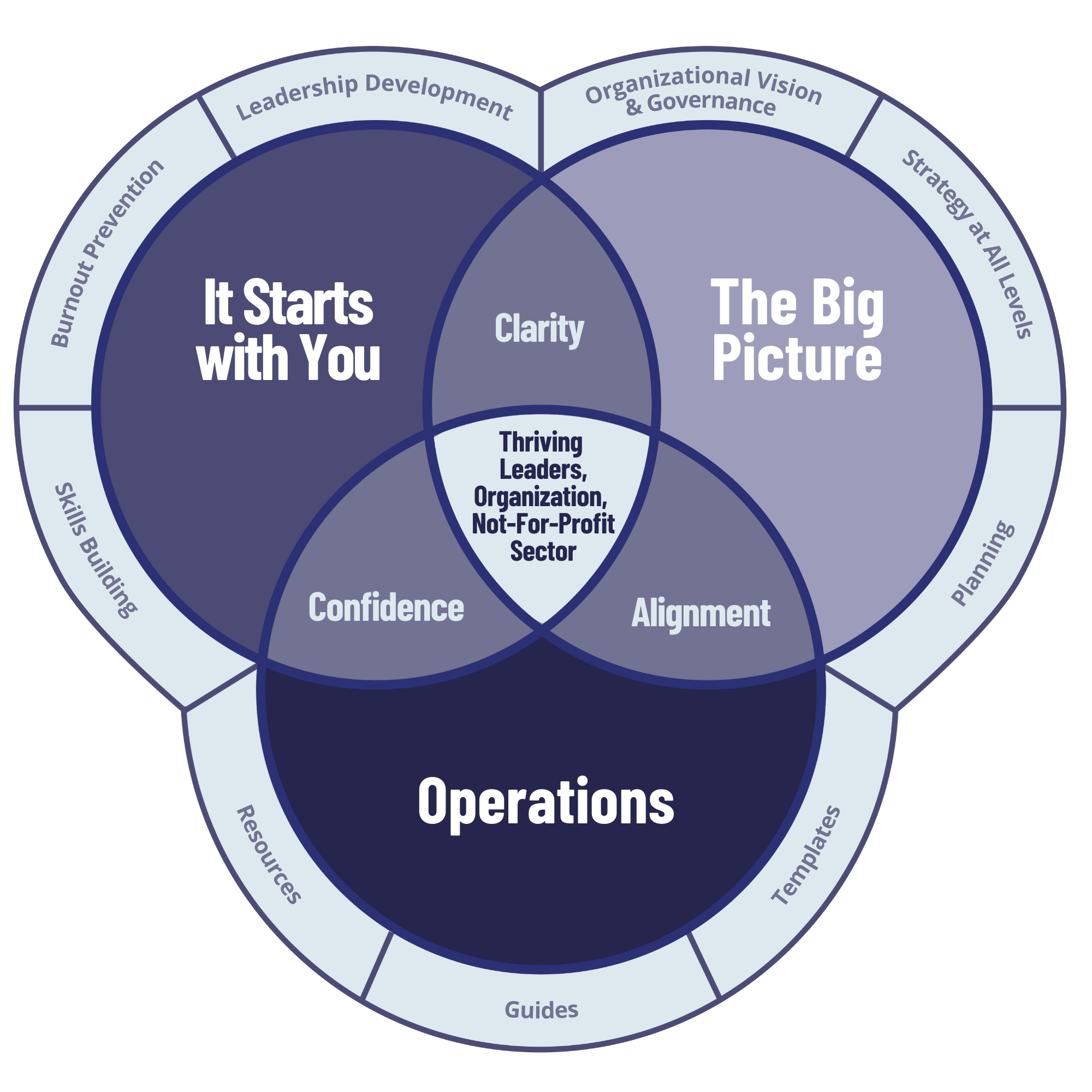
Designed for busy EDs, the content is organized into three comprehensive learning sections, with short video trainings tied to the practical realities of running an organization. What you need to know without any fluff.
1. It Starts with You
The first section is designed to help participants think about their leadership through a customized leadership assessment and determine their personal goals. This section teaches EDs how to protect themselves from some of the challenges of being a leader in the not-for-profit sector, including burnout.
-
Leadership Development
Your Leadership
Change Management
Burnout Prevention
Introduction to Burnout Prevention
Time Management
Boundaries
Managing the Load
Skills Building
Tips for Building Confidence
Imperfect Action
Do the Work
2. The Big Picture
In this section, we move from an inward focus to deepening participants’ understanding of their organization. Here, we explore the ED’s role in translating the organization’s Vision, Mission, and Mandate into practical reality. Participants also learn about governance, roles and responsibilities, strategy, and planning.
-
Organizational Vision & Governance
Intro to Organizational Vision & Governance
Deepening Organizational Understanding
Board/ED Roles & Responsibilities
Governance Models
Strategy at All Levels
Introduction
Not-for-Profit Organizational Life Cycle
Anatomy of a Strategic Plan (including Unlocking the Power of Strategic Planning, The Strategic Planning Process, and How to Implement Your Strategic Plan)
Other Strategies
Planning
Introduction & Planning Cycles
Annual Planning (annual operating plan, annual Board calendar)
Annual Budget
Operational Planning Calendar
Monthly Planning
Bi-weekly Planning
Daily Habits
3. Introduction to Operations
This section is designed to be deeply practical and full of tools, templates, and resources that EDs can use in their own organizations. Often, people worry about what they don’t know. The Operations Section gives context to the various aspects of running a small not-for-profit organization.
-
Human Resources
Recruiting & Onboarding
Performance Management
Compensation & Benefits
Training and Development
Workplace Safety and Health Issues
Succession Planning
Organizational Administration
Filing Systems
Compliance & Records Management
Cyber Security
Calendar & Email Management
Financial Management
Financial Controls & Compliance
Expense Claims
Payroll Calculator
Understanding Financial Statements
Audit Checklist
Revenue Generation
Types of Revenue
Proposal Writing
Fundraising Strategies
Donations & Sponsorships
Social Enterprise
Program & Project Management
Project Management Tools
Understanding Contracts
Project and Event Planning
Terms of Reference
Communications
Communication Agreements
Strategy
ED Reporting
Brand Guidelines
Social Media
Spring 2026
Program Delivery Details

On Air:
How ED Academy changed the leadership game for alumni
Listen below to their stories on CBC Radio.
“The ED Academy has been a great help to me as a new leader in the sector. I love the group conversations, the tools and resources, and the opportunity to meet with the facilitator on a regular basis. I feel really supported."
ED Academy Participant